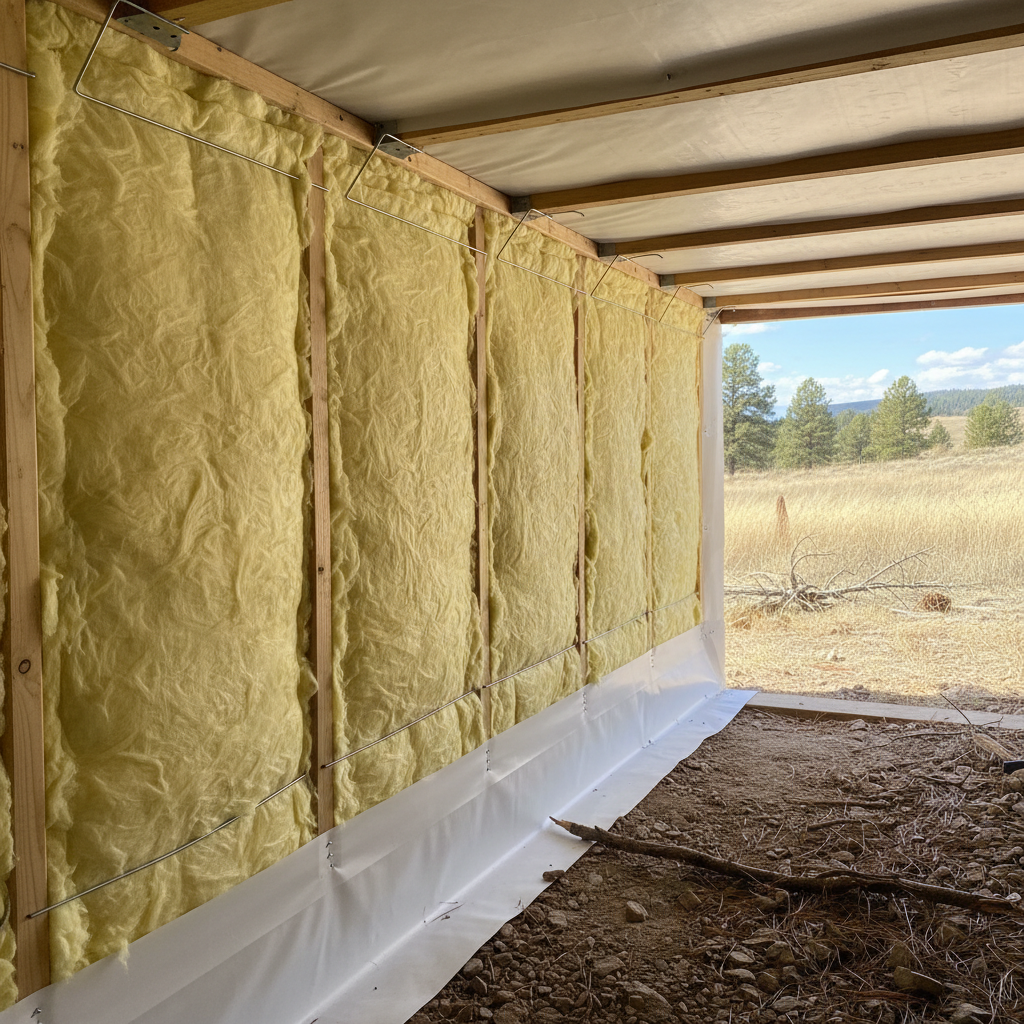
When you crawl down into your home's foundation space and get hit with a wave of damp and chilly air, you notice the problem immediately. Homeowners who live around the Heights or out toward the West End in Billings, MT already know that our local clay soil holds onto moisture. That dampness works its way right up into your floorboards, driving up your heating bills and making your whole house feel drafty come January. Insulating that crawl space makes a big difference, but the work has to be done correctly to avoid mold problems.
Before You Start: Assessing the Mess
Homeowners should never crawl down there with just a stapler and a roll of batts without knowing what they are dealing with first. Apex Insulation Co recommends grabbing a flashlight, wearing old clothes, and checking for a few specific things:
- Standing water or active leaks that need plumbing repairs
- Damp earth that requires a heavy-duty vapor barrier
- Evidence of mice, rats, or local critters nesting in old insulation
- Gaps around rim joists where the bitter winter wind sneaks inside
If your crawl space smells musty or you see white efflorescence on the foundation walls, you have moisture issues. You must seal those areas up and lay down thick 6-mil polyethylene sheeting over the dirt floor before a single piece of Insulation is installed. Otherwise, moisture is trapped directly against your wood framing.
The DIY Phase: What You Can Actually Handle
Plenty of homeowners want to save money by doing the work themselves. If you are handy and do not mind cramped spaces, you can tackle laying down the ground vapor barrier and sealing up minor gaps with spray foam. You can also handle installing rigid foam board along the interior foundation walls if you are running an unvented crawl space setup.
Working overhead between floor joists is difficult work. Your neck will ache, fiberglass fibers will itch, and you will realize quickly why contractors charge what they do. If you are putting up faced batts between floor joists, make sure the vapor barrier faces up toward the warm subfloor in a vented crawl space, though building science has mostly shifted toward sealing and insulating the walls instead of the ceiling.
When to Call a Pro
There is a point where a project turns into a difficult undertaking. If your crawl space requires encapsulating the entire area, installing commercial-grade dehumidifiers, or spraying closed-cell polyurethane foam along rim joists and concrete walls, it is time to bring in backup. Apex Insulation Co sees many do-it-yourself jobs gone wrong where people trapped moisture behind improperly installed plastic or used the wrong R-value for our Montana climate.
Closed-cell spray foam is very effective for Billings crawl spaces because it acts as both an air barrier and a vapor retarder at the same time, but it requires professional mixing equipment and safety gear. If you do not want to spend your Saturday afternoon working in a tight and dusty hole, Apex Insulation Co is here for all your Insulation needs in Billings, MT.
After the Project: Keeping It Dry
Once the Insulation and vapor barriers are locked in, maintenance is still required. Check on the space a month later after a heavy rain or snowmelt. Make sure your sump pump is discharging far away from the foundation, and keep an eye on your new hygrometer readings. A well-maintained crawl space keeps your floors warm, stops frozen pipe risks in the dead of winter, and keeps your Billings home comfortable year-round.