Let us talk about your garage. For many of us here in Billings, it is more than just a place to park a car. It is a workshop, a storage area, and sometimes even a gym. But if the garage is not insulated, it is probably very cold in January and very hot in July. This makes it pretty useless for anything but short trips. If that garage is attached to your house, you are losing a lot of energy and comfort inside your home too.
Insulating your garage can seriously cut down on your energy bills and make that space usable all year. Before you grab a utility knife, you need to figure out what you are working with. You also need to decide what you are comfortable doing yourself. Sometimes it is smarter to bring in someone like Apex Insulation Co.
Before You Start: Planning Your Garage Insulation Project
First, consider what kind of garage you have. Is it attached to your house or is it a standalone structure? This makes a big difference. An attached garage, especially one with a room above it or a shared wall with your living space, is a major thermal bridge. Cold air from an uninsulated attached garage can pull heat right out of your house in the winter. In the summer, it radiates heat right back into the house. Apex Insulation Co. understands these issues for Billings homeowners.
Know Your R-Values (and Billings' Climate)
R-value is a way to say how well insulation resists heat flow. A higher R-value means better insulation. Here in Montana, we deal with some very big temperature changes. We have frigid winters and hot summers. Billings falls into Climate Zone 6B (Cold - Dry) or sometimes even Zone 7 (Very Cold). This depends on the specific location. This means you will need higher R-values than someone in a warmer climate.
- Garage Walls: If your garage walls are 2x4 construction, you are typically looking at R-13 to R-15 for Fiberglass Batts. For 2x6 walls, you might go with R-19. The City of Billings adopted the 2021 International Energy Conservation Code (IECC). This code generally recommends R-20 for walls in our climate zone. If you are converting the garage to living space, those requirements get even stricter.
- Garage Ceiling: This is especially important if you have a room above the garage. You will want R-19 to R-30 for that Floor Assembly. If it is a ceiling under an unconditioned attic space, you are looking at R-38 to R-60. This is similar to a regular attic.
- Garage Door: For an attached, non-heated garage, aim for an R-value of 7 to 9. If the garage is heated, go for R-10 to R-13.
Check for Air Leaks and Moisture
Insulation will not do much good if cold air is just blowing right through cracks. Before you insulate, seal up any gaps around windows, doors, and where pipes or wires go through the walls. This is called Air Sealing. Air Sealing is just as important as the insulation itself. Also, look for any signs of moisture. You do not want to trap moisture behind new insulation. This can lead to bigger problems later on. Apex Insulation Co. can help homeowners in Billings with these important checks.
During the Project: DIY vs. Pro
This is where you decide how much work you are willing to put in. Apex Insulation Co. knows that some homeowners in Billings like to do things themselves.
DIY-Friendly Tasks
For many homeowners in Billings, some parts of Garage Insulation are definitely doable:
- Insulating the Garage Door: This is probably the easiest place to start. You can buy kits with pre-cut Rigid Foam Panels. These panels fit right into your door sections. It is a quick job, often taking just one or two hours. This can make a noticeable difference. Just make sure your garage door opener can handle the extra weight. Sometimes the springs need adjustment by a professional.
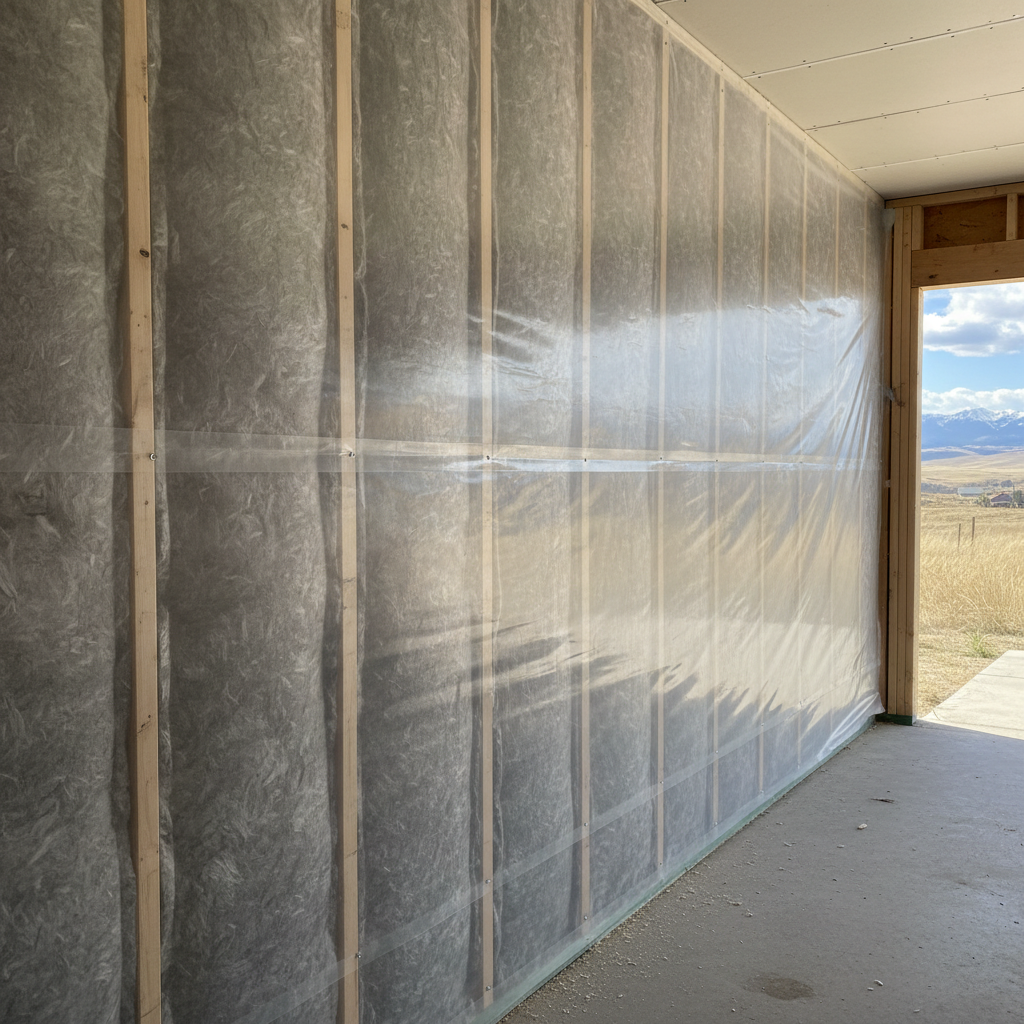
- Adding Batt Insulation to Open Walls: If you have exposed Wall Studs, like in an unfinished garage, installing Fiberglass or Mineral Wool Batts is a common DIY project. You will need a utility knife, a straight edge, a tape measure, and proper safety gear. This includes gloves, long sleeves, a respirator, and eye protection. Cut the Batts to fit snugly between the studs without compressing them. Then staple the paper or foil facing flanges to the studs. Remember, compressed insulation loses its effectiveness.
- Sealing Gaps: Using caulk or expanding foam around penetrations and cracks is a straightforward DIY task. This significantly improves performance.
When to Call a Pro
Some insulation jobs are best left to the experts. Apex Insulation Co. has seen enough DIY attempts gone wrong to know this.
- Blown-In or Spray Foam Insulation: These materials require specialized equipment and expertise to install correctly. DIY Spray Foam Kits are messy, expensive, and it is easy to make mistakes. These mistakes can lead to air leaks or even warped walls. For Blown-In Insulation, you need a special machine. It can get incredibly dusty and itchy if you do not know what you are doing.
- Insulating Finished Walls: If your garage walls are already drywalled, you are looking at either tearing down the drywall to install Batts. Or you can have Dense-Pack Cellulose or Blown-In Fiberglass installed through holes. The latter is a job for a professional.
- Ceilings Below Living Space: If there is a heated room above your garage, insulating that ceiling is very important. This often involves specific R-value requirements. It also sometimes requires Fire-Rated Materials. This can be complex.
- Moisture Issues or Complex Structures: If you find mold, significant water damage, or have unusual framing, call Apex Insulation Co. We can identify the root cause and recommend the right solution for your Billings home.
- Permits and Codes: For significant structural changes or if you are converting the garage to living space, you might need a building permit in Billings. An insulation contractor will know the local codes. This includes the 2021 IECC adopted by the city. They will make sure your project meets them.
DIY insulation can save you money upfront. But poorly installed insulation can cost you more in energy bills and potential repairs later on. Professionals ensure better coverage, Air Sealing, and long-term performance for homeowners in Billings.
After the Project: What to Expect and How to Maintain
Once the insulation is in, you should notice a difference pretty quickly. Your garage will not be as extreme in temperature. If it is an attached garage, you will feel more comfortable in the adjacent rooms of your house.
Keep an eye out for any new drafts or areas that still feel unusually cold or hot. Sometimes, a small gap was missed. For Garage Doors, check the weatherstripping around the edges and the bottom seal. These wear out over time. This is especially true with our Billings wind and temperature changes. They can let a lot of air in.
If you have insulated the walls, you will likely need to cover them with a finish. This could be drywall or PVC panels. This provides a thermal barrier and protects the insulation.
Proper Garage Insulation is a smart investment for any Billings homeowner. It makes your garage more functional. It protects your stored items. It also saves you money on energy bills. Whether you tackle it yourself or call in Apex Insulation Co., getting it done right makes all the difference for properties in Billings, MT.